Materials
The grain of a wood floor, the patina of a fireplace, the weave of an armchair: what gives a room its character is restored as it is.
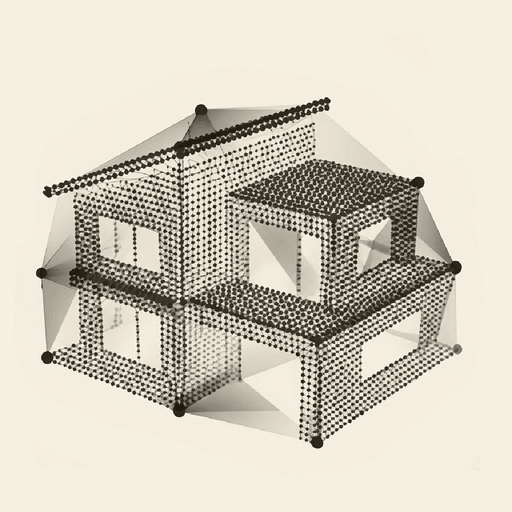
This family of techniques represents a scene with a very large number of small coloured, oriented 3D elements. It restores light and materials finely, and generates new viewpoints in real time.
Captured
Nothing invented by generative AI
Real time
The render follows your movement
Browser
Nothing for the buyer to install
Gaussian Splatting represents a scene not with surfaces but with a multitude of small coloured blobs in three dimensions, each with its own position, shape, orientation and transparency. Assembled, they restore a room with its materials and its light.
For an agency the interest is not the technique: it is that a home finally looks like itself on screen, reflections and textures included, without going through a redrawn model and without a single detail being invented.
 01Capture
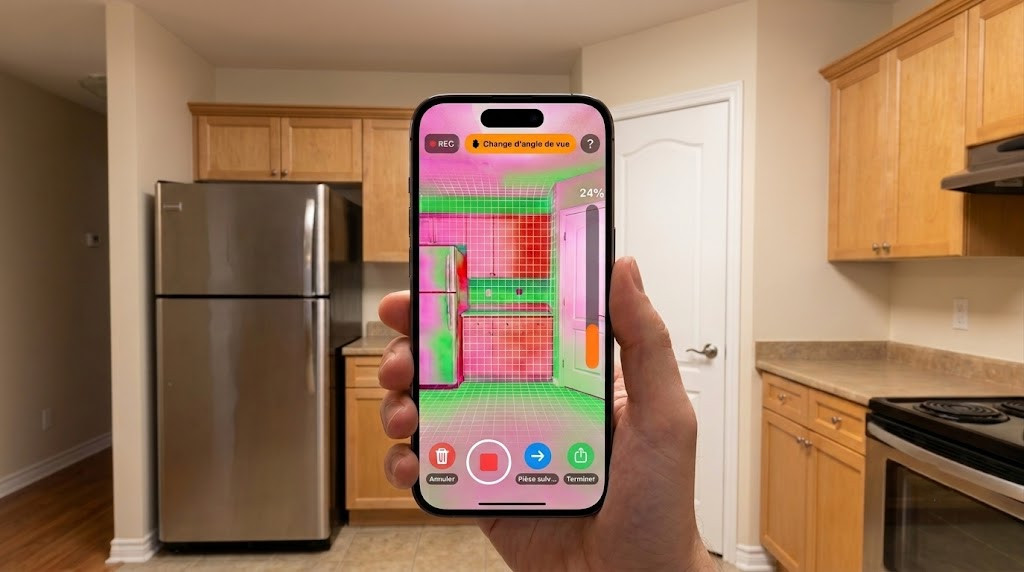
The property is walked with an iPhone Pro. The LiDAR sensor measures depth while the camera records how surfaces look.
 02Geometry
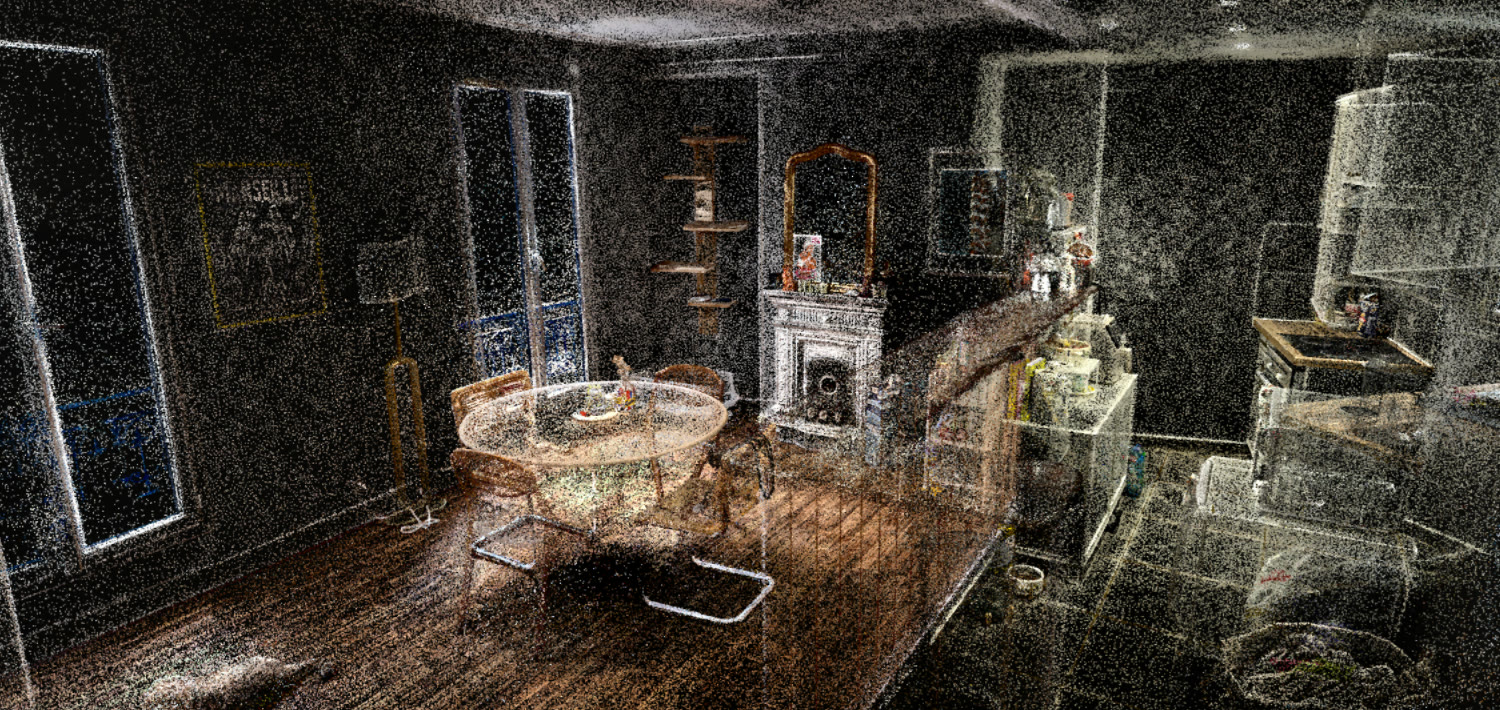
Processing works out where each image was taken from. This is the step that gives the scene its geometry and its true scale.
 03Reconstruction
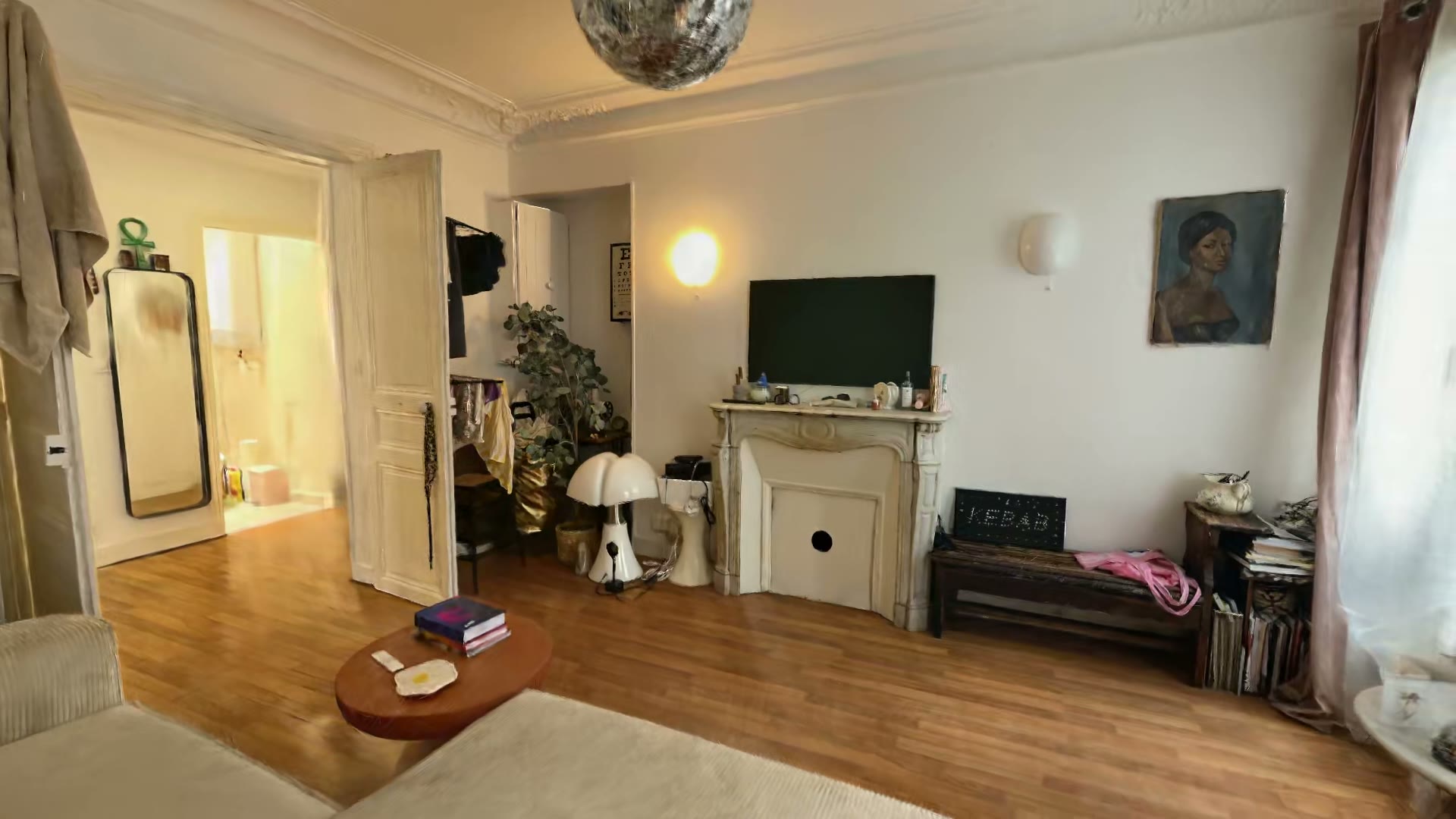
The 3D elements are adjusted until the rendered scene matches the captured images. Nothing is added that was not seen.
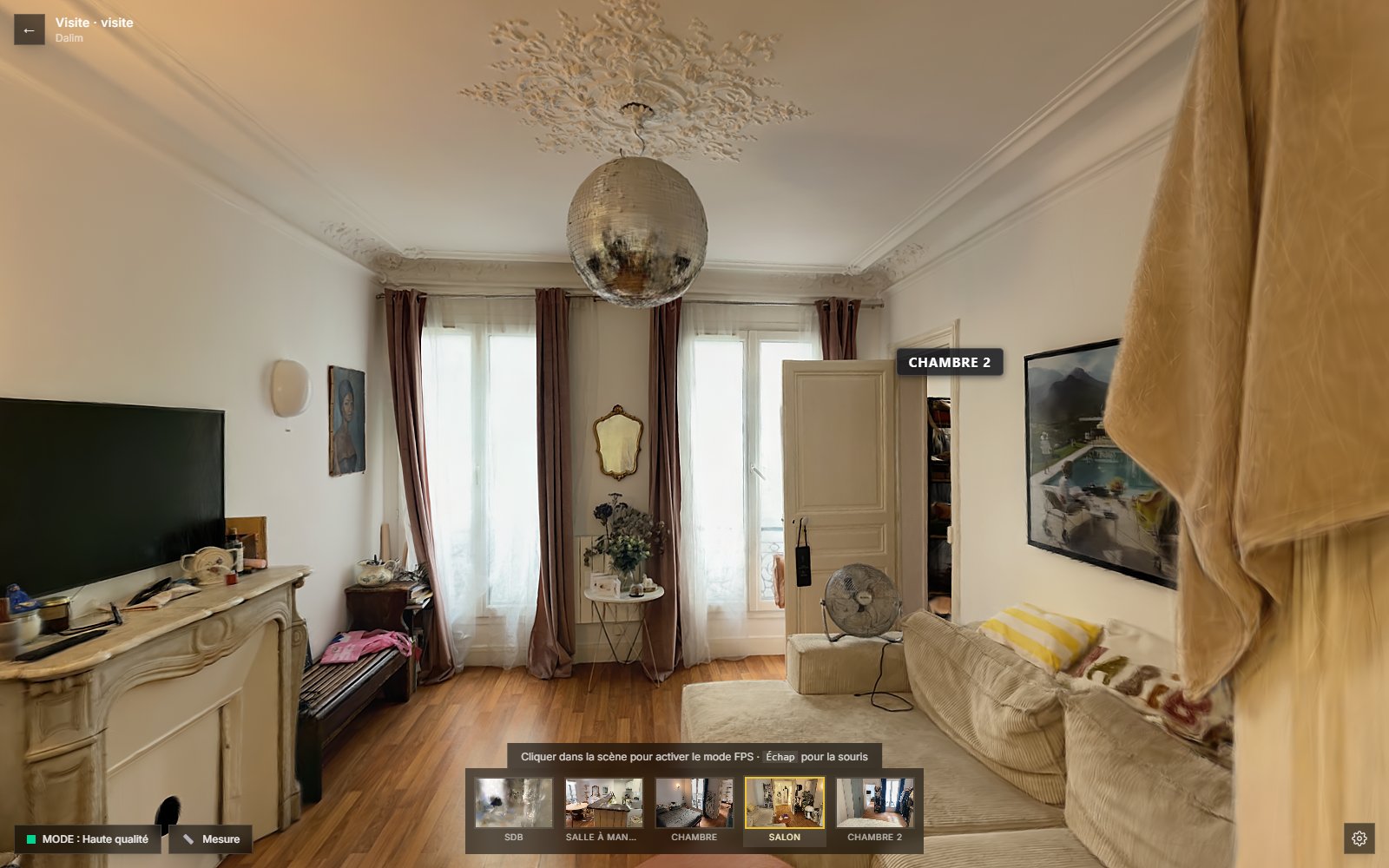 04The viewer
The finished scene is served to the visitor and rendered in real time on their page, with no install and no plugin.
It is not a 360° tour. A panorama is an image taken from a point; here the space itself is represented, which is what lets you move through it rather than change the view. It is not a textured mesh either, the classic games technique where surfaces are built and images pasted onto them.
And above all it is not AI-generated imagery. No furniture is invented, no room is prettified, no texture is hallucinated: what the buyer sees was captured in the property. For property use that is non-negotiable, since showing a home that does not exist puts the agency's responsibility on the line.
The grain of a wood floor, the patina of a fireplace, the weave of an armchair: what gives a room its character is restored as it is.
Window reflections and late afternoon light are captured with the scene rather than added afterwards.
What you see on entering, what hides around the corner, the real distance between two rooms: free movement makes them obvious.
The scene is rebuilt at the true scale of the property, which is what allows measuring directly in the viewer.
A link is enough. The buyer installs nothing, creates no account, and opens the tour straight from the listing.
An area that was not captured stays incomplete rather than being filled with a plausible image: what is shown was seen.
Uploaded captures and the resulting tours remain the customer's property. Dalim makes no use of customer content beyond delivering the service, except for tours explicitly agreed as demonstrations.
The processing of the associated personal data, accounts, property addresses, contacts collected through forms and viewing statistics, is set out in our privacy policy.
A tour stays private until it is published, and a published tour is unpublished in one click.
The sample tour is a flat captured on an iPhone and rendered in your browser. Step up to a surface, look at the light from the windows, and judge the difference against what you know.
No. The reconstruction is adjusted until it matches the images actually captured in the property: no furniture is added, no room is prettified, no texture is invented. An area that was not captured stays incomplete rather than being filled with a plausible image. For property use that is a non-negotiable condition.
None at all. The scene is computed in the visitor's browser, on the phone, tablet or computer they already have. A VR headset is an extra possibility, never a condition of access: the vast majority of buyers open a tour from their phone, between two listings, with nothing to install first.
Nothing whatsoever. Rendering happens in the visitor's browser, with no plugin, no extension and no app to download. That is a practical condition of property use more than a technical choice: nobody installs software to look at a listing, and a tour that demanded it would simply never be viewed.
The two complement each other in a listing rather than replacing one another. Photography works a chosen frame and chosen light, and it is what earns the first click. The tour restores the whole property from every angle, with its flow and its volumes, which no set of still images can show.
The viewer offers a measuring tool giving distances between two points in the scene, useful to know whether a piece of furniture fits or how wide a doorway is. Those values are indicative: they help picture a space rather than produce a document, and they do not replace a survey by a qualified professional.
Phones, tablets, PCs and compatible Macs, through a simple link and with no account to create. The viewer adapts its level of detail to the device displaying it, so it stays fluid on a recent computer as well as on the phone of a buyer checking a listing on the way home in the evening.
A tour is viewed online through its link. Uploaded captures and the tours produced remain the customer's property, and on cancellation an export of the files can be requested within thirty days. There is no free download from the viewer on the buyer's side, which also protects your sellers' properties.
No explanation is worth thirty seconds spent moving around a reconstructed room. After that, we can talk about your listings.